High-Level Glass Repair & Replacement

Failed, damaged or underperforming glazing units at height present safety, weathering and operational risks. We manage the full replacement sequence, from survey and measurement through to temporary works, lifting plans and controlled installation using appropriate lifting equipment.

  • Controlled Repair, Replacement & Maintenance Of High-Level Glazing
  • MEWP Access, Crane Lifting & Robotic Glazing Solutions
  • IRATA-Certified Rope-Access Operatives Through Specialist Partners
  • Nationwide Delivery Across High-Rise, Commercial & Public-Sector Buildings

High-Level Glass Repair and Replacement at Height

A high-level glass repair starts with identifying what has failed and how the unit is held. Glass build-up and safety specification, visible markings, frame and retention details, panel dimensions and weight, adjacent seals and the condition of the supporting assembly all influence whether a local repair is appropriate or the glass must be replaced. A cracked pane, failed insulated glass unit, loose component or recurring leak can require a different method even when each defect appears at the same height.

Alu-Glaze undertakes high-level glass replacement and glazing repair to commercial façades and difficult-access areas. The planned sequence can include confirming the replacement specification, protecting the area, controlled removal, lifting and positioning the new unit, installing compatible glazing and weathering components, and completion checks. Defects that form part of the wider elevation can be coordinated with glass façade remedial works, while the High-Level Glazing service remains the route for projects involving several access-led work types.

High-level façade remedials can address failed seals, silicone joint breakdown, defective flashings, gasket failure, pressure plates, caps, aluminium pressings, replacement glazing and leak repairs to curtain walling and associated façade systems. Works may also extend to cladding panels, copings and interface details where required to restore weather tightness, thermal performance and overall system performance.
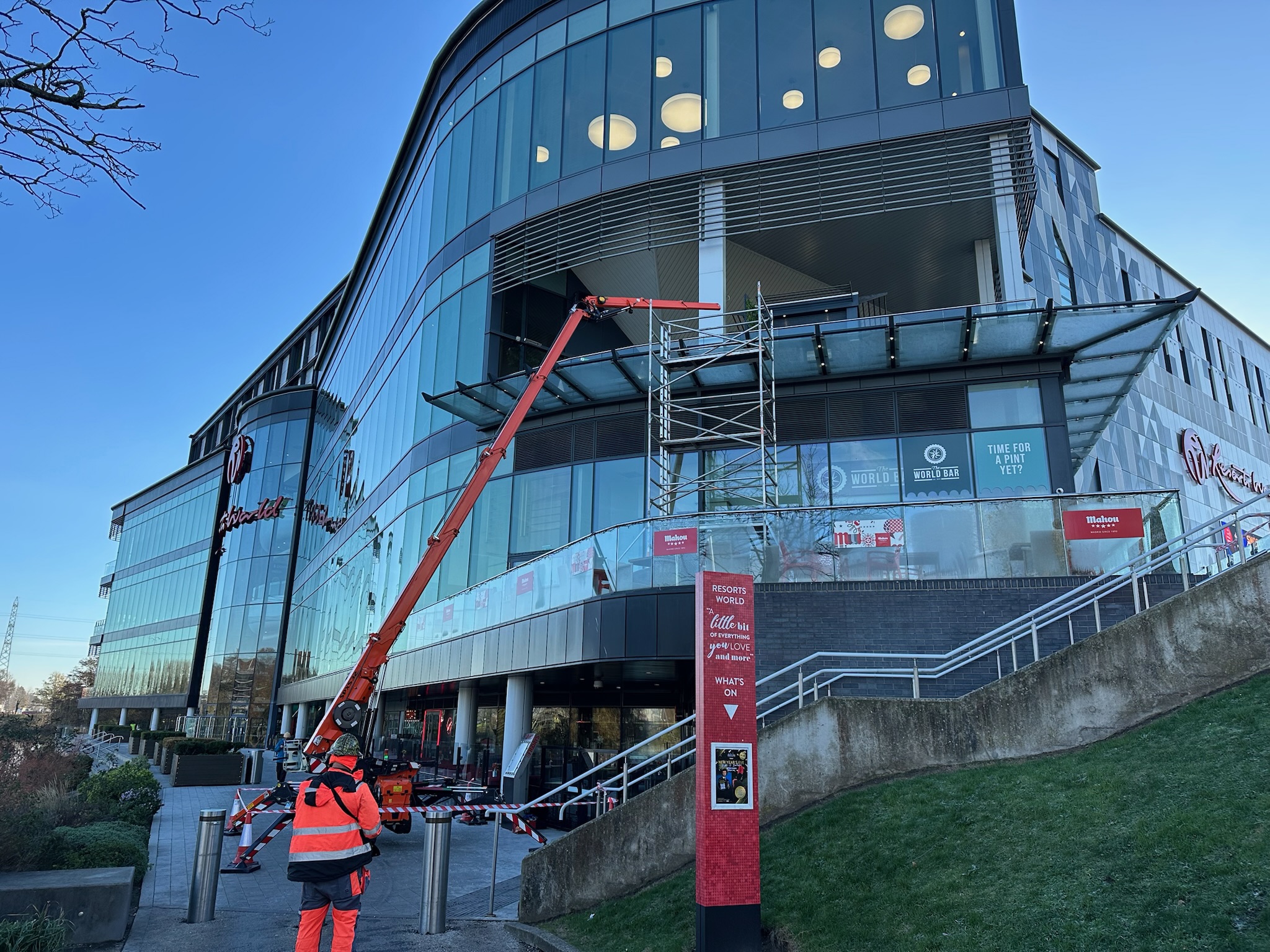
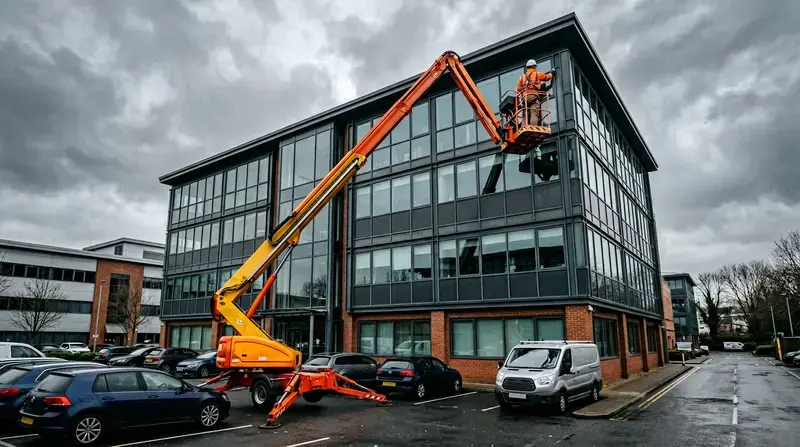
High-level glass repair on a commercial building
Worker in a mobile elevated work platform beside the upper windows of a commercial building

MEWP, Crane and Specialist-Access Delivery for Live Sites

Glazing at height can involve a MEWP, crane, scaffold, building maintenance unit, rope access or a combined method. Selection depends on the panel and retention system, reach, lift path, ground bearing and set-up space, façade geometry, weather limits and the public or occupied areas around the work. Where rope access is a suitable part of the method, the dedicated rope access glazing service explains that route in more detail.

Live-site planning may include internal and external protection, exclusion zones, pedestrian or traffic controls, lift planning, temporary weathering and phased work zones so the client can manage affected areas. The Surveys & Technical Reports service can define uncertain glass, defects and access before quotation. Urgent high-level failures can be assessed during Alu-Glaze's opening hours: 07:30–17:00 Monday to Thursday and 07:30–16:00 Friday, with the business closed at weekends. Attendance or temporary make-safe work is subject to site, access and resource conditions and is not presented as a 24/7 service or a guaranteed same-day completion.

FROM ENQUIRY TO EXECUTION

How We Plan High-Level Glazing Works

01

Access Enquiry

We begin by reviewing drawings, photographs and any available access or structural information to understand the geometry of the building and the constraints around public interface, traffic routes and adjacent property. This allows us to outline likely access methods, lifting requirements and programme implications at an early stage.

Where you already have planned glazing or façade works in mind, we can align our thinking with related scopes on related pages such as glass roofs, canopies and atriums or façade remedial works, ensuring that access planning is joined-up.

02

Method Statement & Planning

A site assessment confirms clearances, loadings, existing access systems and the practicalities of MEWPs, cranes or rope access. We then prepare a proposal that sets out the defined scope, recommended programme allowances and key risks or assumptions.

For technically demanding access arrangements we reference industry guidance and manufacturers’ instructions, and can align to IRATA documentation where rope access is involved. At this stage many clients also choose to integrate findings from technical surveys and reports so that remedial or upgrade works can be delivered in a single sequence.

03

Safe Delivery at Height

Once instructed, we finalise lift plans, traffic management (where applicable) and site-specific RAMS covering both access and glazing operations. Works are then delivered through controlled work zones and clear communication to building management teams so that tenants and stakeholders understand when and where activity will take place.

On completion we provide appropriate documentation, including any photographic records, inspection notes and maintenance recommendations. Where projects form part of wider glazing upgrades — for example, performance improvements coordinated through Glazing Services — we make sure information flows cleanly between workstreams.

High-Level Glazing FAQs

Common Questions