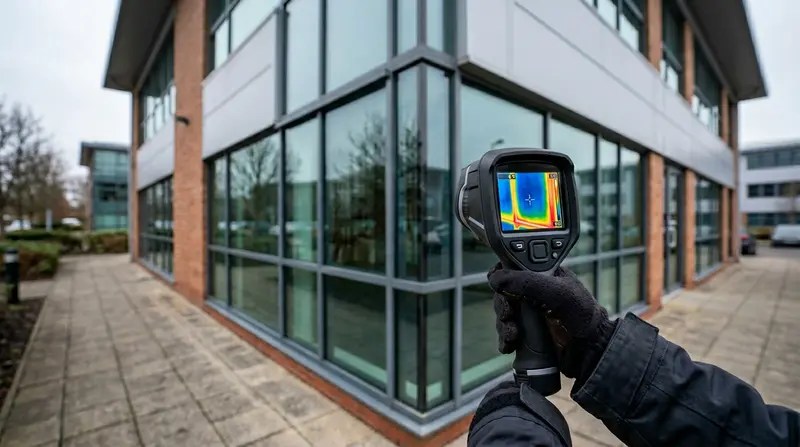
What a Window U-Value Measures
Thermal transmittance, usually called a U-value, describes the rate at which heat passes through a building element when there is a temperature difference across it. It is expressed in watts per square metre kelvin (W/m²K). A lower number means less heat transfer through the element under the stated assessment conditions and therefore better insulation performance.
U-values allow designers to compare the thermal performance of windows, glazing and frames on a consistent basis. They also form part of whole-building energy calculations. They are not a direct prediction of the energy bill for a particular property: building size, orientation, occupancy, heating and cooling systems, ventilation, air leakage, controls and operating hours all influence real energy use.
Uw, Ug and Uf: Which Number Are You Looking At?
The subscript matters. Quotation documents sometimes present the lowest component value prominently even though the project needs the performance of the complete window. Before comparing offers, confirm whether each figure relates to the glass, frame or assembled product.
- Uw — whole-window U-value: the performance of the complete window, including the glazed area, frame and the thermal effect at the glass edge. This is normally the most useful value when comparing complete window products.
- Ug — glazing U-value: the thermal transmittance of the glazing construction. It is influenced by pane arrangement, coatings, cavity widths, gas fill and other glass-unit details, but it does not include the frame.
- Uf — frame U-value: the thermal transmittance of the frame profile. For aluminium systems, thermal-break design, profile geometry and material interfaces have a substantial influence.
- Ψg — glazing-edge linear transmittance: the additional heat flow associated with the junction between glass, spacer and frame. Spacer selection and system geometry affect this value.
Uw is not obtained by simply averaging Ug and Uf. The result is weighted by the relevant glass and frame areas and includes the edge junction. Window size, opening configuration and the ratio of frame to glass can therefore change the whole-window result even where the nominal glass and frame products are the same.
What Changes a Window's U-Value?
Insulated glass units use two or more panes separated by sealed cavities. Low-emissivity coatings reduce radiative heat transfer, suitable cavity gases reduce conductive and convective transfer, and warm-edge spacers can improve the perimeter condition. The final Ug value depends on the complete build-up rather than pane count alone; a poorly configured triple-glazed unit is not automatically the best option for a particular project.
The frame is equally important. Modern aluminium windows normally use a thermal barrier between internal and external parts of the profile. The width, continuity and geometry of that barrier, together with frame depth, reinforcement, drainage and opening details, affect Uf and the internal surface temperatures. Older non-thermally broken aluminium frames can conduct heat readily even if the glass has been upgraded.
Product configuration also changes the result. A fixed light has less opening-frame material than a comparable opening light. Mullions, transoms, vents and smaller pane sizes increase the proportion of framing. This is why a declared result based on a reference size may not be identical to the calculated performance of every window in a schedule.
What a U-Value Does Not Tell You
U-value addresses heat transfer through the window construction. It does not, by itself, describe solar heat gain, visible light, acoustic insulation, safety, security, weather resistance, air permeability or resistance to wind load. A very low U-value can still sit within a poorly detailed opening that leaks air or water around its perimeter.
Solar-control requirements need separate glass data, including the relevant solar factor and light transmission. Overheating analysis should consider orientation, shading, internal gains and ventilation; selecting the lowest U-value in isolation can miss the dominant summer-performance issue. Likewise, condensation risk depends on surface temperatures, indoor humidity and local thermal bridges rather than a single headline number.
Installation interfaces also matter. Insulation continuity, perimeter seals, cavity closures, membranes, fixings and junction geometry can introduce heat loss that is not represented by the centre-pane value. Project teams should coordinate the window specification with the surrounding wall or façade detail.
Assessing Existing Commercial Windows
For an occupied commercial property, the first question is not simply how low the replacement U-value can be. The survey should establish the existing system, profile condition, glazing pocket, drainage, hardware, seals, interfaces and safe load capacity. These findings determine whether a glass-only upgrade, targeted refurbishment or full window replacement is technically realistic.
Replacing an older insulated glass unit with a thicker or heavier unit may require different beads, gaskets and setting arrangements. The existing frame may not accept the proposed build-up, and the improved Ug value may deliver a limited whole-window benefit if the frame remains highly conductive. Compatibility, structural checks and glass safety requirements therefore come before procurement.
Where defects are localised, our commercial aluminium window maintenance service can address seals, gaskets, drainage, hardware and failed units. Wider thermal or lifecycle decisions may require replacement-window design and installation, supported by a documented condition survey.
Building Regulations and Approved Document L
In England, energy-performance requirements for building work sit within Part L of the Building Regulations. The applicable route depends on the type of building, whether the work concerns a new build or an existing building, the nature and extent of the alteration, and any transitional provisions. Different rules and guidance apply in Scotland, Wales and Northern Ireland.
Requirements and approved guidance change over time, so this article deliberately does not present one U-value as a universal compliance threshold. Use the current GOV.UK Approved Document L guidance, identify the edition that applies to the project and confirm the compliance approach with the responsible designer, energy assessor and building-control body. A product value should be supported by appropriate calculation or test information for the specified configuration.
Compliance is a project decision, not a claim that should be inferred from a brochure headline. The whole building, area-weighted performance, limiting values, consequential work and other requirements may all be relevant depending on the scope. The specification should record both the target and the evidence needed at handover.
A Practical Window U-Value Specification Checklist
When reviewing a window schedule, tender or refurbishment proposal, ask the same questions of every supplier. This makes the comparison transparent and reduces the risk of comparing a centre-pane Ug value with another supplier's whole-window Uw value.
- Is the stated figure Uw, Ug or Uf, and which standard or calculation method supports it?
- Does the value relate to a declared reference size or the actual scheduled window configuration?
- What frame system, thermal break, glass build-up, spacer and gas fill are included?
- Are opening lights, mullions, transoms, vents and panels represented in the result?
- How are perimeter interfaces and insulation continuity addressed in the installation detail?
- What separate targets apply to solar control, light transmission, acoustics, safety and security?
- Which regulatory edition and project-specific compliance route have been confirmed?
- What commissioning, product data and completion records will be supplied?
Frequently Asked Questions
Is a lower window U-value always better?
A lower value means less heat transfer for the assessed element, but the best specification also needs to
address solar gain, daylight, air leakage, safety, structure, cost and the surrounding construction.
Can I compare the Ug values in two glass quotations?
You can compare equivalent glass build-ups, but Ug does not describe the complete window. For a window
product comparison, ask for Uw on a consistent size and configuration basis.
Will new insulated glass make an old aluminium frame compliant?
Not necessarily. The frame, edge junction, configuration and installation all affect whole-window
performance. The frame must also be suitable for the new unit's thickness, weight and glazing method.
Does a U-value predict condensation?
No. It contributes to surface-temperature assessment, but condensation also depends on humidity, external
conditions, local thermal bridges, airflow and installation details.