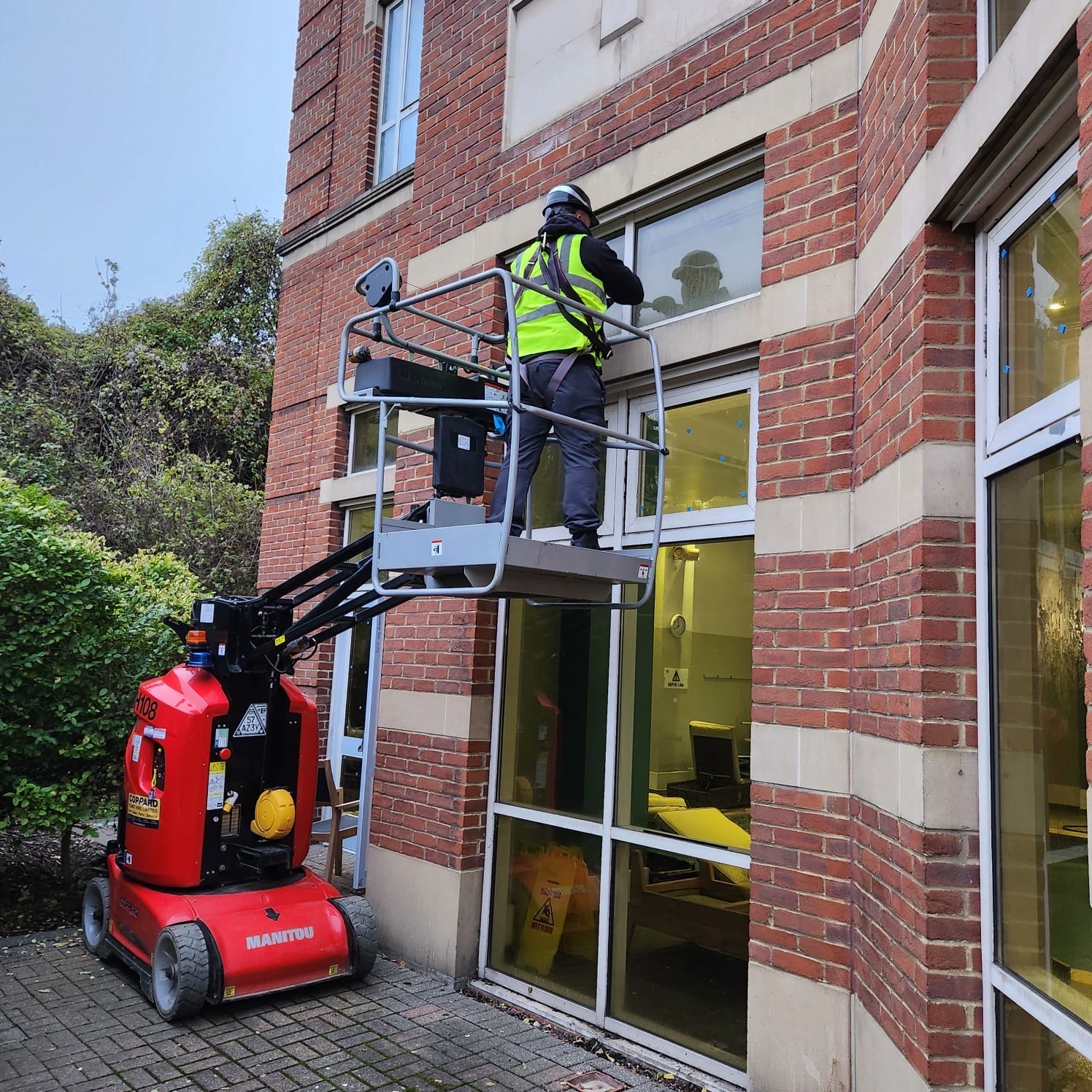
First Identify Where the Moisture Is
Double glazing has several surfaces. The outer pane has a weather-facing surface and a cavity-facing surface; the inner pane has its own cavity-facing and room-facing surfaces. Condensation can appear on the surface you can touch from outside, on the surface you can touch from inside, or on a surface sealed inside the insulated glass unit. Each location points to a different set of likely causes.
Record when the moisture appears, which elevations or floors are affected, whether it clears as conditions change and whether it can be wiped from a safely accessible surface. Photographs taken at first appearance and after it clears are useful. Do not lean from openings or access high-level glass to perform a touch test; use a glazing specialist where the affected area cannot be observed safely.
How Condensation Forms
Air contains water vapour. The amount it can hold changes with temperature. When air next to a surface is cooled to its dew point, some vapour changes into liquid droplets on that surface. Condensation therefore needs both sufficient moisture and a surface temperature low enough for the local conditions.
Glass temperature is influenced by outdoor weather, indoor temperature, glazing construction, coatings, frame and spacer design, shading, wind, sky exposure and local airflow. Humidity is influenced by occupancy, processes, kitchens, showers, drying, plants, ventilation and HVAC operation. This is why the same window may be clear on one morning and wet on another, or why adjacent panes can show different patterns.
Condensation on the Outside Surface
Exterior condensation forms when the weather-facing pane becomes colder than the dew point of the outdoor air. It is often seen during clear, still and humid conditions because the glass can lose heat by radiation to the sky. The outer pane of an efficient insulated unit may receive relatively little heat from indoors, allowing its surface to remain cool enough for dew to form.
For that reason, external condensation can accompany well-insulated glazing, but it is not a standalone proof of efficiency and should not be used as a performance certificate. Orientation, shelter, coatings, nearby buildings, vegetation and small changes in weather can determine which panes are affected. It is normally temporary and evaporates as the glass or outside air warms or wind increases.
External moisture is usually not a sealed-unit failure. However, persistent staining, runoff across sensitive finishes, impaired visibility at critical locations or an unexpected pattern after building work may justify a review. Dirt and deposits give droplets places to form and can leave marks after evaporation, so an appropriate cleaning regime may improve appearance without altering the underlying physics.
Condensation on the Room-Side Surface
Room-side condensation occurs when warm, moisture-laden internal air meets glass or framing below its dew point. Kitchens, showers, drying rooms, swimming facilities, high occupancy and some industrial processes can create high moisture loads. In offices and public buildings, ventilation schedules, blocked grilles, local blinds, furniture and HVAC imbalance can reduce airflow at the window and create local cold zones.
The pattern can help diagnosis. Condensation concentrated at glass edges may correspond with the cooler spacer and frame junction. Moisture across the whole pane may point to higher room humidity, low internal temperature or weak glazing performance. Condensation on aluminium framing can highlight a conductive profile or thermal bridge, but survey evidence is needed before selecting a remedy.
Repeated internal condensation should not simply be wiped away and ignored. It can damage decorations, seals, reveals and adjacent materials and can support mould growth where surfaces remain damp. The response should consider moisture generation, safe ventilation, heating or cooling strategy, airflow, glazing and junction details together. Altering ventilation or building controls without understanding the system can create other comfort or indoor-air-quality problems.
Condensation Between the Panes
An insulated glass unit is manufactured as a sealed assembly. If misting or droplets are on a cavity-facing surface and cannot be wiped from either accessible side, moisture has usually entered the cavity following deterioration or failure of the edge-seal system. The unit may cycle between clear and misted as temperature and sunlight change, especially during the earlier stages of failure.
A failed seal does not automatically mean the complete aluminium window must be replaced. A compatible replacement insulated glass unit may be possible if the frame, beads, gaskets, setting blocks, drainage and surrounding interfaces remain serviceable. The replacement specification must match the required size, thickness, safety, thermal, solar, acoustic and visual characteristics and be supported correctly within the existing system.
Widespread failures, corroded or distorted frames, blocked drainage, recurring edge damage or obsolete glazing details can make a wider refurbishment or replacement programme more proportionate. A survey should distinguish the visible symptom from the condition that allowed the failure to develop.
Conditions That Can Look Similar
Not every cloudy pane is condensation. Mineral deposits, cleaning residue, coating variation, scratches, surface contamination and staining from runoff can create haze on an accessible surface. Some glass can show temporary optical effects under particular light and viewing angles. A fractured pane, delamination or damage to a film or interlayer requires a different response from a misted sealed unit.
Water at a window reveal may also come from another source. Failed perimeter sealant, defective flashings, blocked drainage, curtain-wall pressure paths, masonry defects or water tracking from above can wet the internal area without being caused by surface condensation. Timing is useful: moisture closely associated with wind-driven rain suggests a different investigation from dew appearing on clear mornings.
When a Professional Inspection Is Needed
Occasional exterior dew that clears with the weather is normally an observation rather than an emergency. Arrange an inspection where moisture is trapped between panes, internal condensation is persistent, several units fail in the same area, water appears at frames or reveals, or the cause cannot be identified safely. Early review is particularly valuable for occupied commercial buildings where a repeat defect can affect many rooms or elevations.
Urgent assessment is appropriate if glass is cracked, loose, bowed or displaced; if glazing components are falling or unstable; if water is reaching electrical equipment; or if an overhead or high-level pane may create a public-safety risk. Keep people away from the affected area and do not attempt high-level access or removal without the correct equipment and controls.
A useful survey records unit markings and build-up where available, frame and gasket condition, drainage, perimeter interfaces, orientation, room use, humidity, temperature and the timing of symptoms. Thermal imaging or moisture readings can support an investigation when taken under suitable conditions, but an image or reading must be interpreted in context rather than treated as a diagnosis on its own.
What Can Be Done?
- Exterior surface: monitor the timing and pattern, maintain the glass appropriately and review drainage or visibility implications where necessary. Temporary outdoor dew often needs no repair.
- Room-side surface: assess humidity sources, HVAC and ventilation operation, internal temperature, airflow at the glass and cold bridges before deciding whether controls, ventilation, detailing or glazing improvements are required.
- Between panes: inspect the insulated glass unit and supporting window system, then replace the failed unit to a compatible specification where the frame remains serviceable.
- Water around the opening: investigate seals, drainage and the surrounding façade or wall rather than assuming the glass is the source.
Alu-Glaze supports commercial properties with glazing surveys and inspections, window maintenance, insulated glass-unit replacement and wider aluminium window repair or replacement. The recommended scope is based on the observed condition and building requirements.
Frequently Asked Questions
Does condensation outside mean my double glazing is working?
It can occur because efficient glazing allows the outer pane to remain cool, but it is not proof of a
particular performance level. Outdoor humidity, sky exposure, shelter and temperature also matter.
Why do only some windows have exterior condensation?
Small differences in orientation, shading, wind, nearby structures, coatings, frame geometry and surface
temperature can change whether a pane falls below the outdoor dew point.
Can misting between panes be repaired without replacing the window?
Often the insulated glass unit can be replaced while retaining a sound frame. The frame and glazing system
must first be checked for compatibility, drainage and any wider defects.
Will new windows eliminate all internal condensation?
No. Better surface temperatures may reduce risk, but indoor moisture, ventilation, heating, airflow and
local thermal bridges still affect whether condensation forms.